

COMMENTARY:
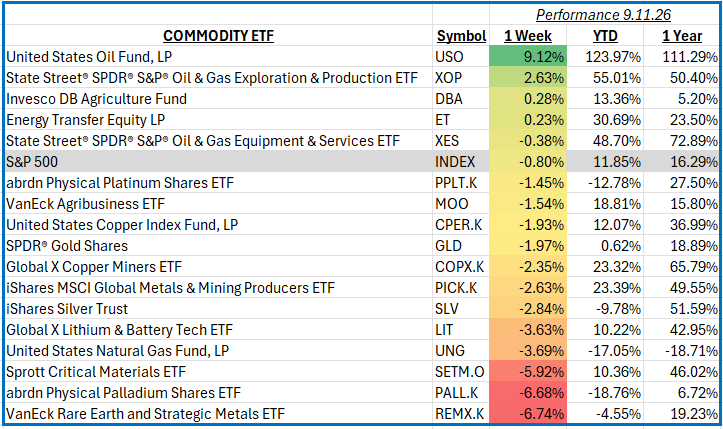
The S&P 500 declined 0.80% for the week as global commodity markets were dominated by a sharp increase in energy prices and renewed geopolitical risks. Crude oil moved back above $100 per barrel, with Brent gaining roughly 9% and WTI about 9% as attacks and disruptions around the Strait of Hormuz and Bab el-Mandeb raised concerns about global supply. U.S. diesel prices also reached a record above $6 per gallon. At the same time, the International Energy Agency lowered its 2026 oil-demand forecast, highlighting the potential economic damage from elevated energy costs.
Energy commodities were the clear leaders, with the oil exposure gaining 9.12%, outperforming the S&P 500 by 9.92 percentage points, the largest difference among the major commodity exposures. Exploration and production companies also advanced 2.63%, supported by higher crude prices. Exxon Mobil, Chevron, ConocoPhillips, EOG Resources and Occidental Petroleum were important contributors. The rally reflected concerns that attacks on shipping and Saudi infrastructure could further restrict global oil flows. Brent finished at $104.61 and WTI at $100.05 despite a Friday pullback on reports of possible diplomatic efforts involving the Strait of Hormuz.
Agriculture was comparatively resilient, with broad agricultural commodities gaining 0.28%. Corn, soybeans and wheat-related holdings benefited from shifting expectations around global crop supplies and weather, while agricultural-equipment companies such as Deere and machinery manufacturers provided additional support. The broader agricultural complex remained considerably less volatile than energy, metals and precious metals as investors focused on supply conditions and the potential impact of higher fuel and transportation costs on farming economics.
Precious and industrial metals were mixed. Gold and silver remained important defensive commodities amid geopolitical uncertainty, while copper and lithium-related companies faced more uneven trading as higher interest rates and concerns about global economic growth offset longer-term demand from electrification and infrastructure. Freeport-McMoRan, Southern Copper, Albemarle and lithium producers were among the companies influencing performance. Platinum also remained sensitive to industrial-demand expectations and the broader risk-off tone.
Palladium and rare-earth metals were the weakest exposures, falling 6.68% and 6.74%, respectively. The rare-earth group was the worst performer, Companies such as MP Materials, Lynas Rare Earths and Albemarle faced pressure as investors reduced exposure to more cyclical and specialized metals. Palladium producers and miners were similarly weak as concerns over automobile demand and substitution continued to weigh on the outlook.
Overall, commodities reflected a sharp divide this week: energy benefited from immediate supply disruptions, while industrial and specialty metals struggled with higher rates and economic-growth concerns. The combination of geopolitical risk, elevated oil prices and inflationary pressure will remain an important driver for commodity investors in the weeks ahead.