COMMENTARY:
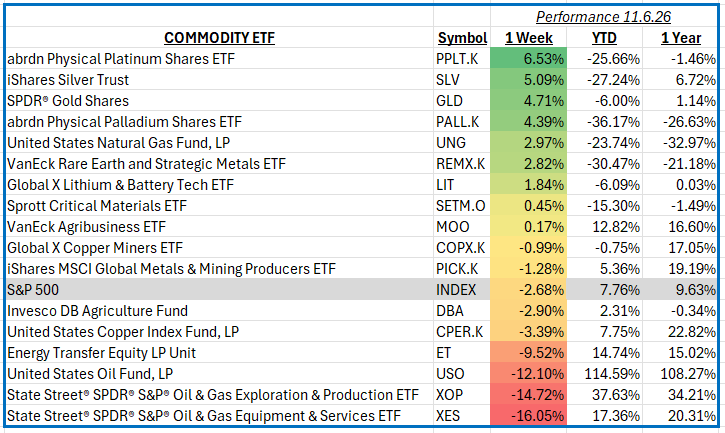
The S&P 500 declined 2.68% for the week ending November 5, 2026, as geopolitical developments, shifting inflation expectations, and volatile commodity prices influenced global markets. The U.S. midterm elections increased expectations for diplomatic efforts to end the conflict with Iran, sending crude oil prices sharply lower as investors reassessed the risk of supply disruptions. Meanwhile, precious metals attracted renewed interest following recent volatility, while concerns about global economic growth and industrial demand weighed on selected commodities. Natural gas and agricultural markets also faced changing supply-and-demand dynamics.
Precious Metals: Platinum, silver, and gold led commodity-related investments, gaining 6.53%, 5.09%, and 4.71%, respectively. Platinum benefited from changing expectations for industrial demand and precious-metal prices, while silver received support from bargain hunting following recent selling pressure. Gold also rebounded as declining oil prices eased inflation concerns and investors reassessed geopolitical risks. Major gold producers, including Newmont, Agnico Eagle Mines, and Barrick Mining, remained important companies to watch, although physical bullion prices were the primary drivers of these precious-metal exposures. Platinum’s 6.53% advance outperformed the S&P 500 by 9.21 percentage points.
Crude Oil and Energy Services: Oil exploration and production companies, along with energy equipment and services providers, experienced significant pressure as crude prices declined. Brent crude and West Texas Intermediate fell sharply following the U.S. midterm elections, as investors anticipated renewed diplomatic efforts to resolve the Iran conflict and reduce disruptions to global oil shipments. Companies such as Exxon Mobil, Chevron, Halliburton, Schlumberger, and Baker Hughes were relevant to the performance of these businesses. Lower oil prices can reduce expected revenue for producers and potentially weaken demand for drilling and oilfield services. However, continued threats to shipping through the Strait of Hormuz left the longer-term supply outlook uncertain.
Industrial and Battery Metals: Copper, lithium, and diversified mining companies remained sensitive to expectations for global manufacturing, infrastructure investment, and electric-vehicle demand. Freeport-McMoRan and Southern Copper were important copper producers, while Albemarle and Sociedad Química y Minera de Chile provided exposure to lithium markets. Rare-earth and diversified miners also faced changing expectations for industrial demand and strategic mineral supply chains. Investors continued balancing long-term electrification and infrastructure opportunities against near-term economic uncertainty.
Natural Gas and Agriculture: Natural gas investments remained influenced by weather expectations, storage levels, and seasonal heating demand. Producers such as EQT and Cheniere Energy were important companies within the natural gas value chain. Agricultural commodities faced different supply-and-demand pressures, with wheat, corn, and soybean prices responding to harvest conditions, export demand, and global inventories. Companies such as Archer-Daniels-Midland, Bunge Global, and Deere provided exposure to agricultural processing and equipment markets.
Overall, precious metals strengthened while energy-related investments weakened amid changing geopolitical expectations. Commodity markets remained volatile as investors weighed diplomatic developments, inflation, and global economic demand.